

At the edge of the court
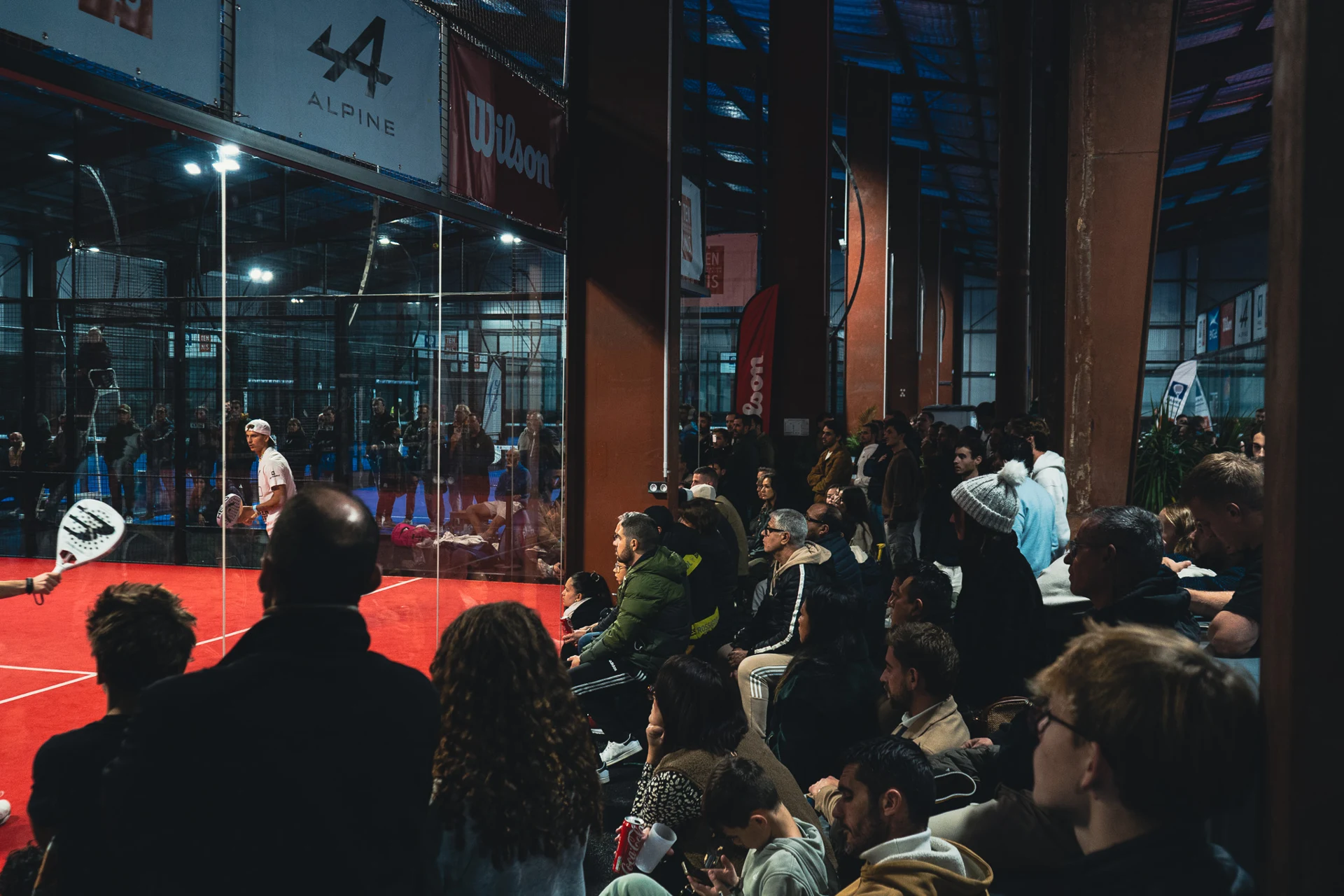
In one photograph from the weekend, the first thing you see is people’s backs. Spectators stand shoulder to shoulder under Break’s roof. On the left, the umpire’s chair rises above them. The players are almost out of sight. The photograph captures something the results sheet cannot: people chose to spend part of their weekend watching padel.
For Break, that was part of the project from the start. The club wanted the way it prepared the courts, welcomed spectators and presented the competition to match the standard of play. It began away from the red court, with a rota and a list of roles to fill.
Before the first match comes the rota
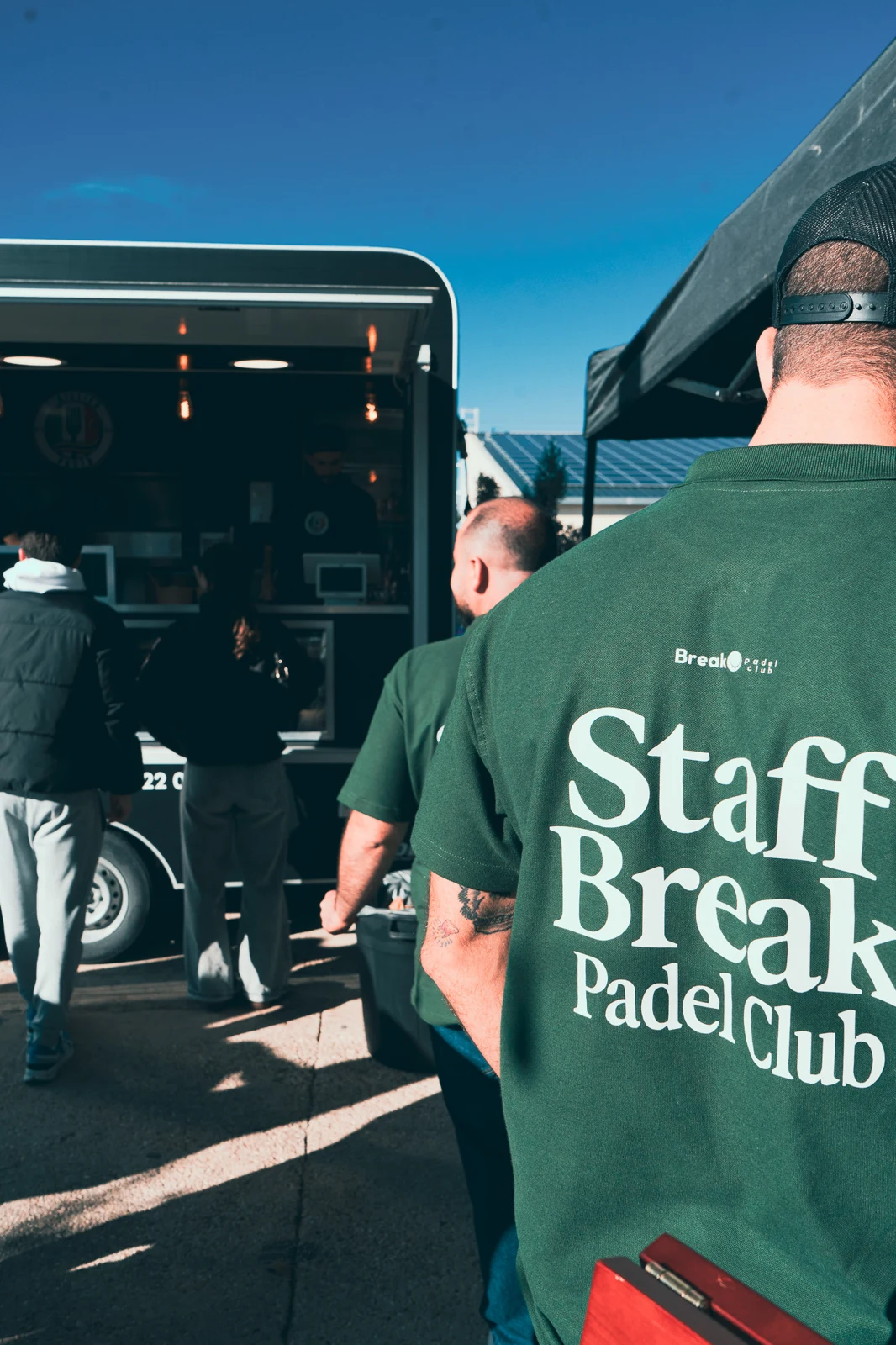
The club assembled a volunteer team, assigned each person a role and drew up a rota for all three days. Together with club staff, around 30 people kept the event running. The rota made it clear who was responsible and when someone else would take over.
Every court was restored. The club created a set for the occasion and installed a bar indoors. The courts mattered directly to the players. The set gave the weekend its own identity. The bar gave people somewhere to meet between matches. Taken together, these choices show how much care Break wanted to put into the experience for competitors and spectators.
What the venue makes possible
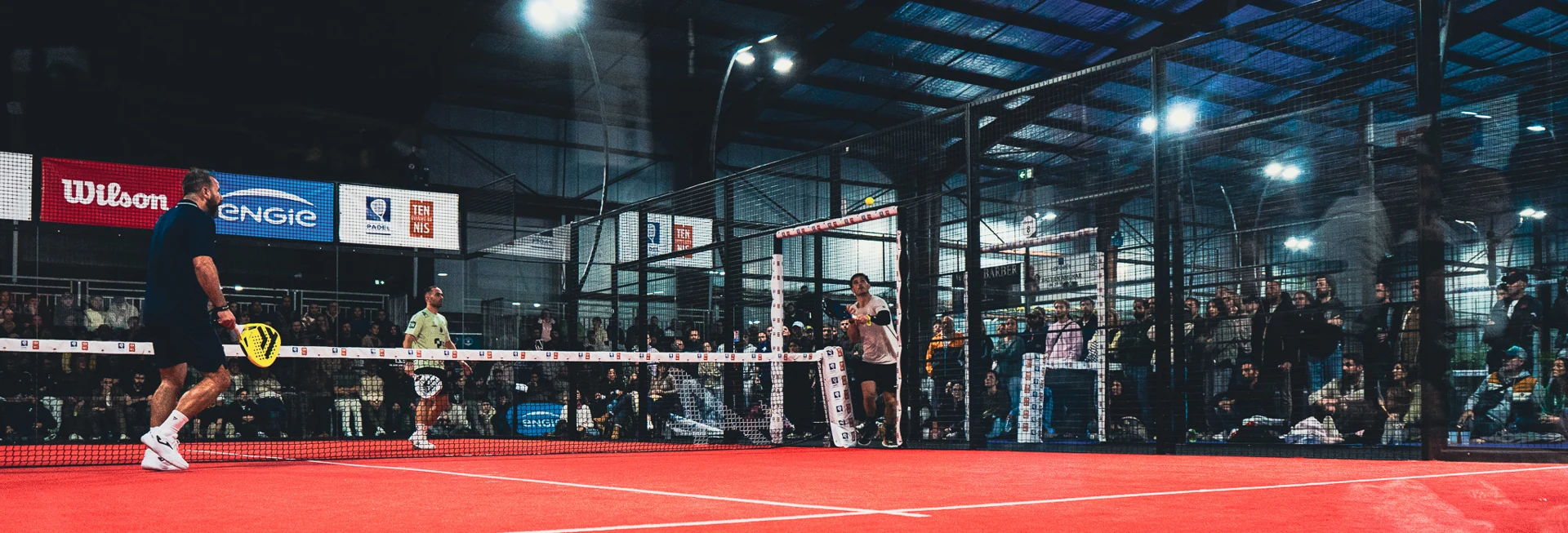
The indoor courts and the space around them let Break host matches and welcome spectators in the same venue. The rota and the volunteers kept it all working for three days. Hosting an event of this size takes a suitable venue, preparation and people ready to take over on the ground.
Giving families a reason to stay
Break estimates that more than 2,000 people came through the club over the weekend. That gives an idea of the scale of the event. It does not tell us how many were discovering padel or how many will come back.
A family unfamiliar with the circuit can come for one match, take a break and head back to the court. They do not need to follow an entire draw or know in advance whom to watch. A welcoming venue makes it easier to discover the sport. The quality of the play gives people a reason to stay.
Finding players to look up to
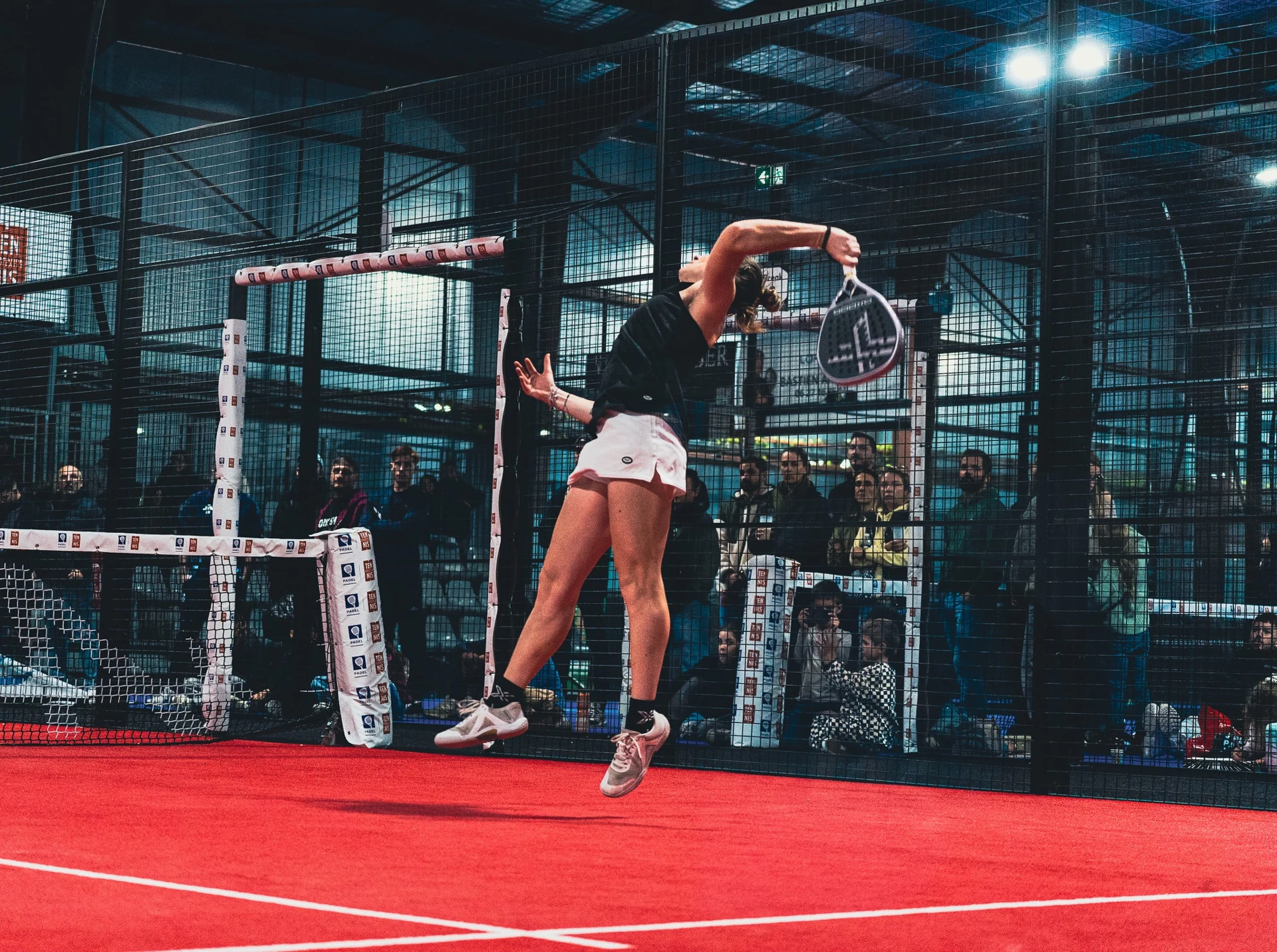
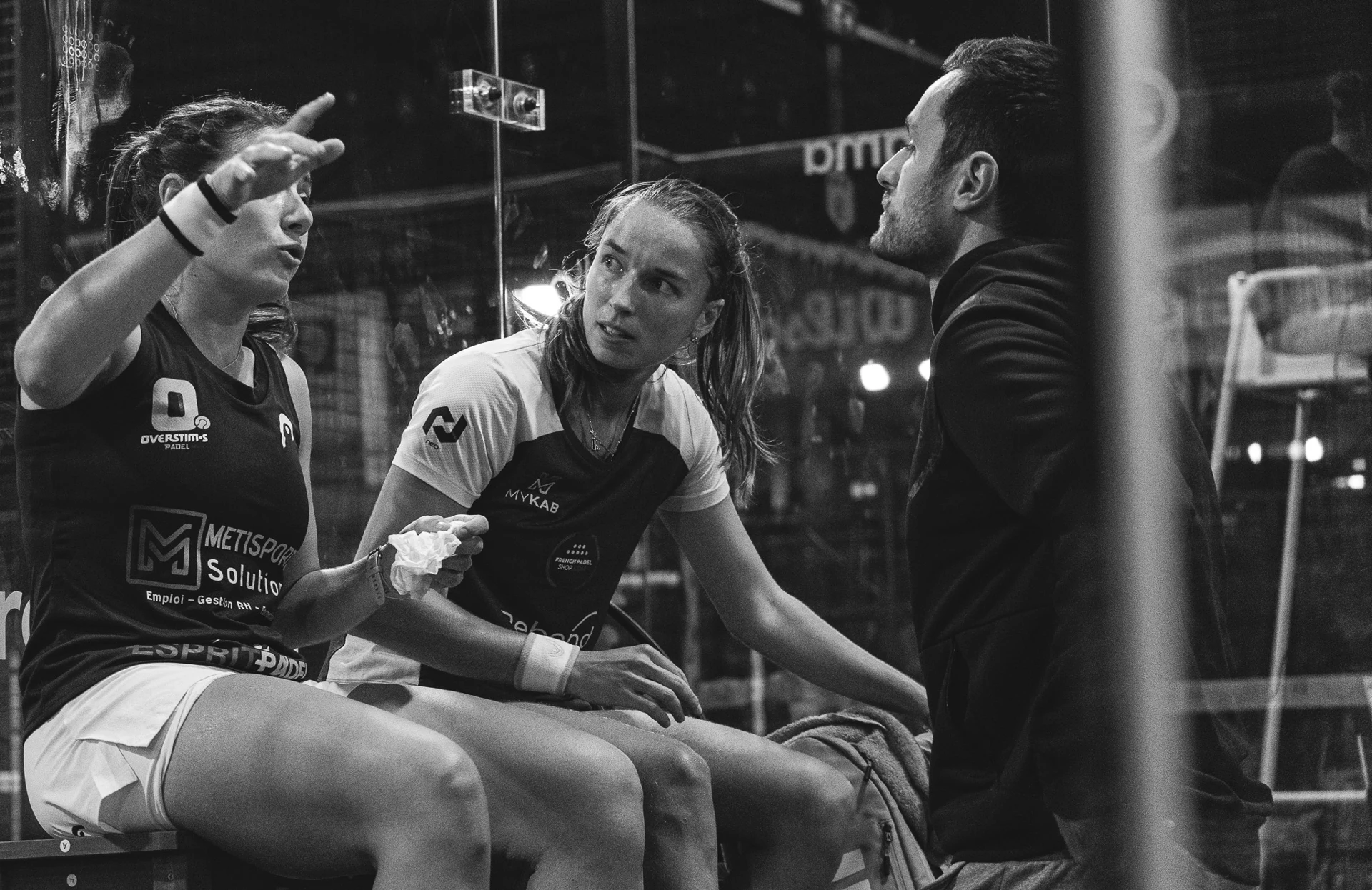
In another photograph, a player winds up for a shot in mid-air above the red court. Spectators sit just beyond the mesh. From there, you can see how she sets her feet, recovers after a shot and communicates with her partner. For a child who already plays or is thinking of starting, these are things to watch and perhaps try later.
Giving the women’s draw room alongside the men’s matters. Watching both lets young people see different ways to play as a team. A player can become a role model through how she handles a low ball, talks to her partner or resets for the next point. Highlights rarely leave time for those moments.
What a federation event can do for padel culture
A P3000 already matters to the people competing. A host club can make it matter to the public too: something people put in their calendar, bring someone to and talk about afterwards. That is what makes the care given to a federation event culturally significant. It lets people see high-level padel close to home, instead of experiencing it only as a score or a short video.
The national circuit starts to have familiar faces. Regulars have something to share with newcomers, and the people who run the club day to day help shape how their community encounters competition.
Other clubs do not need to copy Break’s set-up or recruit the same number of people. The example shows what a club can do with the resources it has: prepare the venue for competitors, think about where spectators fit and give volunteers clear roles. That work can build a lasting habit: coming back to the club to watch other people play.
The film · YouTube
THE INSIDE
Anthony Pastre’s film about the P3000 at Break Padel Club.
Watch on YouTube ↗Padel also grows when people have a reason to come and watch.